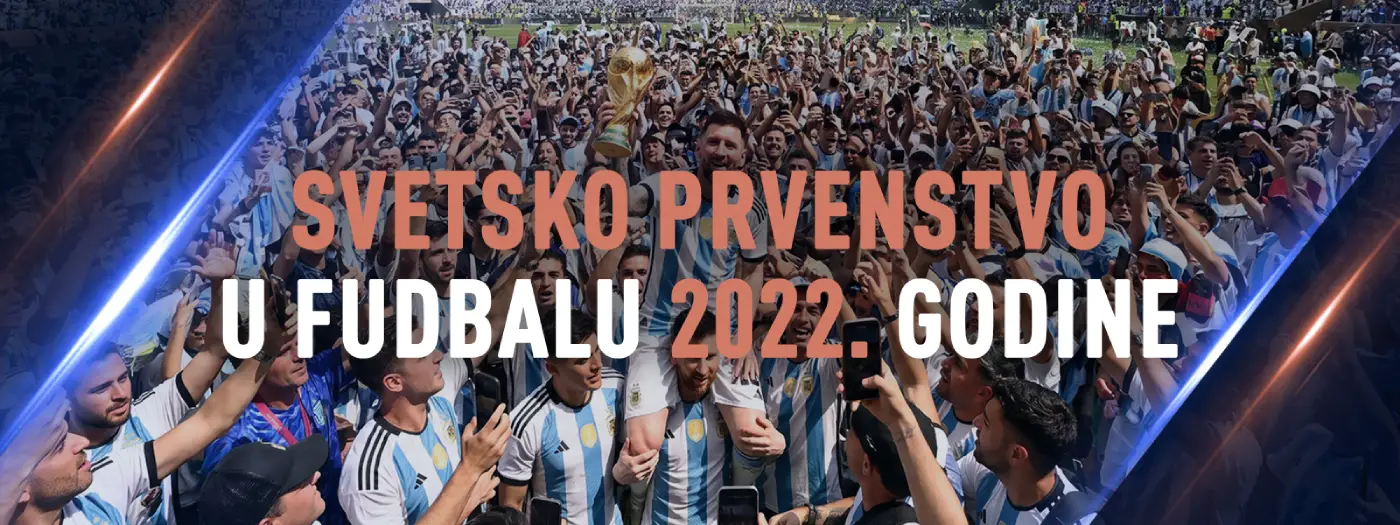
FIFA World Cup 2022
The 2022 FIFA World Cup was held in Qatar from November 20 to December 18 and was the 22nd edition of the tournament. It will be remembered for one of the most dramatic finals in World Cup history, a number of major surprises and the crowning achievement of Lionel Messi’s career.
The World Cup in Qatar was the first in history to be held in November and December, with the change in schedule designed to avoid the extreme summer temperatures in the Middle East. The timing sparked considerable debate because it disrupted the European football calendar, but it also allowed players to arrive at the tournament in the middle of the competitive season and in peak physical condition. It was also the most geographically compact World Cup ever held at the time, with short distances between stadiums and a high concentration of fans in a relatively small area.
Historical and Organisational Context
Qatar was awarded the right to host the tournament in 2010, as part of the same bidding process that saw Russia selected to host the 2018 World Cup. From the outset, the tournament was the subject of international controversy, ranging from the challenges posed by the climate and working conditions during the construction of the infrastructure to questions surrounding the long-term sustainability of the stadiums after the tournament.
The matches were played across eight stadiums in five cities: Doha, Lusail, Al Rayyan, Al Wakrah and Al Khor. The final was held at Lusail Stadium in front of more than 88,000 spectators.
From a technological standpoint, the tournament was one of the most advanced in history. A semi-automated offside technology system, combined with an enhanced VAR protocol, significantly accelerated the decision-making process and helped reduce lengthy discussions surrounding refereeing decisions.
Qualifying and Teams
A total of 206 national teams took part in the qualifying process. The final tournament retained the 32-team format, making it the last World Cup to feature 32 teams before the expansion to 48 at the following edition, for which 2026 World Cup betting is already available
Qatar qualified automatically as the host nation, while France entered the tournament as the defending champions from 2018. Europe had 13 places, Africa had five, Asia had four plus the host nation, South America had four, while CONCACAF had four.
The tournament brought together players from different generations – Messi and Ronaldo in the later stages of their international careers, Mbappé at the peak of his powers, as well as young players such as Enzo Fernández, Jude Bellingham and Joško Gvardiol, who offered a glimpse of the next generation of world football.
Host Country and Tournament Specifics
The 2022 World Cup was the most geographically compact tournament in history, with the short distances between stadiums allowing fans to attend multiple matches within a short period. This organisational model gave the tournament an intensity and continuity that had not previously been possible at World Cups spread across multiple locations.
The atmosphere was distinctive, largely due to the large numbers of fans from South America and North Africa, giving the tournament a strong emotional character. Support for Morocco was particularly notable, with the team’s success taking on a wider symbolic significance.
The World Cup Campaign
Tournament Format
he format remained unchanged from previous tournaments: eight groups of four teams, with the top two from each group advancing to the Round of 16. Extra time and, if necessary, penalty shootouts were used in the knockout stages.
Group Stage
The tournament began with a major shock as Saudi Arabia defeated Argentina 2–1 in their opening match, ending Argentina’s 36-match unbeaten run. The defeat initially appeared to be a major setback, but it would later prove to be a turning point in the team’s campaign.
Germany were eliminated in the group stage for the second consecutive World Cup, despite beating Costa Rica in their final match, as Japan joined Spain in advancing from the group.
Belgium were also eliminated in the group stage, effectively bringing an end to a generation that had been regarded as one of the tournament’s favourites for years.
Morocco finished top of the group ahead of Croatia and Belgium, showcasing an organised and disciplined approach built around a strong defensive structure.
The Knockout Stage and Key Moments
The Round of 16 saw Morocco eliminate Spain in a penalty shootout, with goalkeeper Bono becoming a national hero.
Brazil were eliminated by Croatia in the quarter-finals after extra time and a penalty shootout. Neymar put Brazil ahead in extra time, but Croatia equalised before going on to win the shootout.
Morocco became the first African nation in history to reach a World Cup semi-final after defeating Portugal 1–0.
Argentina defeated the Netherlands in a dramatic quarter-final penalty shootout after a tense and fiercely contested match.
In the semi-finals, Argentina defeated Croatia 3–0, while France beat Morocco 2–0.
The Final and the Battle for the Title
The final was played on December 18, 2022, between Argentina and France and is widely regarded as one of the greatest finals in World Cup history.
Argentina took a 2–0 lead through goals from Messi, who converted a penalty, and Di María. France came from behind late in regulation time, with Mbappé scoring twice within just a few minutes.
Messi restored Argentina’s lead in extra time, but Mbappé completed his hat-trick from the penalty spot to make it 3–3.
Argentina eventually won 4–2 on penalties, securing their third World Cup title after their previous triumphs in 1978 and 1986.
Standout Players of the Tournament
Lionel Messi won the Golden Ball as the tournament’s best player, becoming the first player to win the award twice.
Kylian Mbappé finished as the tournament’s leading scorer with eight goals, becoming only the second player in history to score a hat-trick in a World Cup final, after Geoff Hurst in 1966.
Emiliano Martínez played a key role in the penalty shootouts against the Netherlands and France.
Enzo Fernández was named the tournament’s Best Young Player.
Statistics and Facts
A total of 64 matches were played at the tournament, with 172 goals scored, setting a record for a 32-team World Cup.
The 2022 World Cup was the last tournament to feature 32 teams before the expansion to 48 in 2026, when the 2026 FIFA World Cup will be held.
The 2022 World Cup’s Place in Football History
The 2022 World Cup will be remembered as a tournament of major surprises, technological innovation and a historic final.
The World Cup in Qatar brought one chapter of world football to a symbolic close, cementing Messi’s place among the game’s greatest players while also heralding a new generation that will shape the sport over the coming decade.