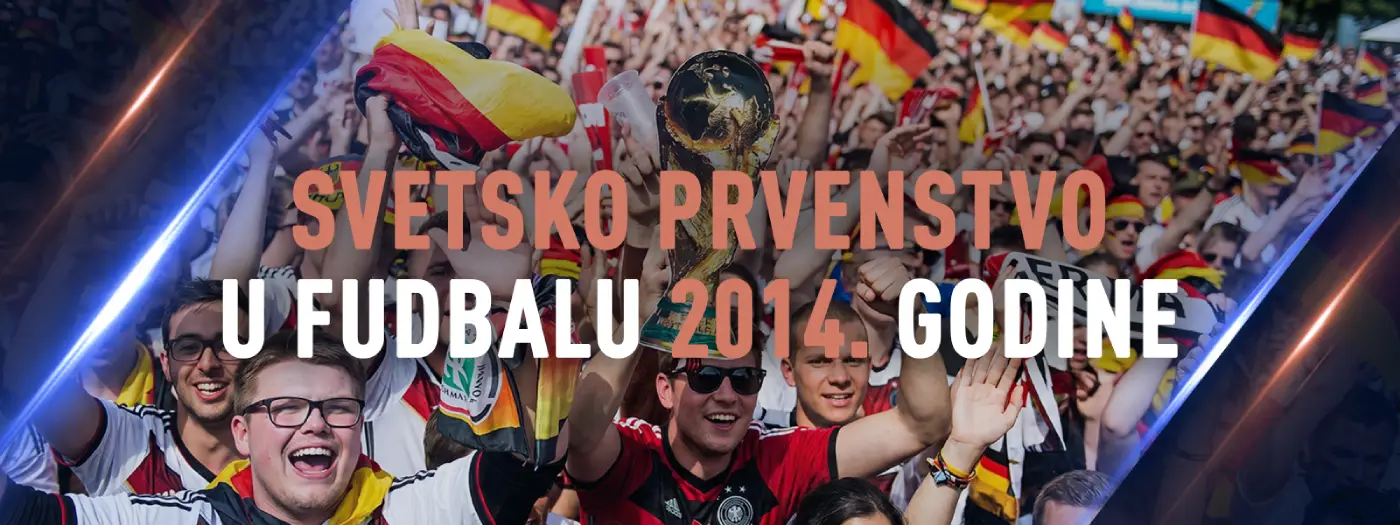
FIFA World Cup 2014
The 2014 FIFA World Cup was held in Brazil from June 12 to July 13 and was the 20th edition of the tournament. The competition is remembered for its high-scoring games, dramatic knockout matches and one of the most unforgettable semifinals in World Cup history.
The World Cup in Brazil symbolically marked the tournament’s return to a country widely regarded as the spiritual home of football. It was a competition defined by emotion, intensity and moments that would forever shape football history. Brazil entered the tournament hoping to restore its reputation as an unstoppable footballing powerhouse, but the tournament’s closing stages would instead become one of the darkest chapters in the country’s sporting history.
Historical and Organisational Context
Brazil was awarded the right to host the tournament in 2007, giving the country the opportunity to stage the FIFA World Cup for the second time, following the famous 1950 tournament. The comparison with the infamous “Maracanazo” of 1950 was a recurring theme in the build-up to the tournament.
Matches were played across 12 host cities: Rio de Janeiro, São Paulo, Belo Horizonte, Brasília, Salvador, Fortaleza, Porto Alegre, Recife, Natal, Manaus, Cuiabá and Curitiba. The final was played at the Maracanã in Rio de Janeiro before a crowd of more than 74,000 spectators.
The tournament was accompanied by protests over infrastructure spending and social inequality, but the action on the pitch soon became the main focus of attention.
Qualifying and Tournament Format
A total of 204 national teams took part in the qualifying process. The final tournament retained the 32-team format, with the teams divided into eight groups of four.
As hosts, Brazil qualified automatically, while Spain entered the tournament as defending champions after winning the 2010 World Cup. Europe was represented by 13 teams, Africa by five, Asia by four, South America by six including Brazil, and CONCACAF by four.
The tournament brought together a generation of players in their prime, including Lionel Messi, Neymar, Arjen Robben, Robin van Persie, Thomas Müller, Toni Kroos and Luis Suárez. Many of these stars would go on to continue shaping world football at the next major tournament, the 2018 World Cup.
The Host Nation and Tournament Atmosphere
Brazil entered the tournament under enormous pressure and with exceptionally high expectations. Football is deeply woven into the country’s national identity, while playing on home soil added another layer of emotion and pressure.
The atmosphere inside the stadiums was electric, fuelled by passionate supporters, music and colourful crowds. The scenes in Belo Horizonte during the semifinal were particularly memorable, as the Mineirão became the setting for one of the most historic defeats ever suffered by a host nation.
The 2014 World Cup
Tournament Format
The tournament followed the standard format: eight groups of four teams, with the top two teams in each group advancing to the Round of 16.
Knockout-stage matches went to extra time if the scores were level after 90 minutes and, when necessary, were decided by a penalty shootout.
Group Stage
The group stage was one of the highest-scoring in World Cup history. From the opening matches, the tournament produced plenty of goals and attacking football.
The Netherlands stunned Spain with a 5–1 victory in a rematch of the 2010 World Cup final, a result that symbolically marked the end of Spain’s dominance. Robin van Persie scored one of the tournament’s most iconic goals with a spectacular diving header.
Spain were eliminated in the group stage in one of the tournament’s biggest surprises. Italy and England also failed to advance.
Costa Rica emerged as one of the tournament’s surprise packages, topping a group that also featured Uruguay, Italy and England.
The Knockout Stage and Key Moments
The Round of 16 produced a series of dramatic encounters. Brazil survived a penalty shootout against Chile after Mauricio Pinilla struck the crossbar in the final moments of extra time.
Colombia continued their impressive run, led by James Rodríguez, who scored one of the tournament’s finest goals against Uruguay.
In the quarterfinals, Argentina beat Belgium 1–0, while Germany eliminated France by the same scoreline.
The semifinal between Brazil and Germany ended in a historic 7–1 victory for Germany. The Germans scored five goals inside the opening 29 minutes, producing one of the most shocking moments in World Cup history. Brazil were without the injured Neymar and suspended captain Thiago Silva, but the scale of the defeat surpassed all expectations.
In the other semifinal, Argentina defeated the Netherlands in a penalty shootout.
The Final and the Battle for the Title
The final was played on July 13, 2014, at the Maracanã in Rio de Janeiro, with Germany facing Argentina. The match was a tense and tactically disciplined affair.
In the 113th minute of extra time, Mario Götze scored the decisive goal following an assist from André Schürrle, securing Germany’s fourth World Cup title.
Germany became the first European nation to win the World Cup on South American soil.
The Tournament’s Standout Players
James Rodríguez finished as the tournament’s leading scorer with six goals.
Lionel Messi won the Golden Ball as the tournament’s best player.
Manuel Neuer was named the tournament’s best goalkeeper and became a symbol of the modern “sweeper-keeper” role.
The tournament also saw Miroslav Klose make history. His 16th World Cup goal made him the competition’s all-time leading scorer, surpassing Brazil’s Ronaldo. The record further underlined the significance of the German generation that went on to lift the trophy.
Thomas Müller and Toni Kroos were among the key figures in a German side that combined discipline, physical strength and tactical precision.
Statistics and Interesting Facts
The tournament featured 64 matches and produced 171 goals, making it one of the highest-scoring World Cups of the modern era.
The Brazil–Germany semifinal, which ended in a 7–1 victory for Germany, remains the biggest defeat ever suffered by a host nation at the World Cup and one of the most emphatic results in the history of the tournament’s knockout stages.
The Legacy of the 2014 World Cup
The 2014 World Cup is remembered as a tournament of extraordinary emotion, spectacular goals and unforgettable moments.
It confirmed the strength of Germany’s systematic approach and the stability of its golden generation, while also marking the end of Spain’s era of dominance.
he World Cup in Brazil demonstrated just how unpredictable football can be — and how quickly the course of a tournament can change in the space of just a few minutes.