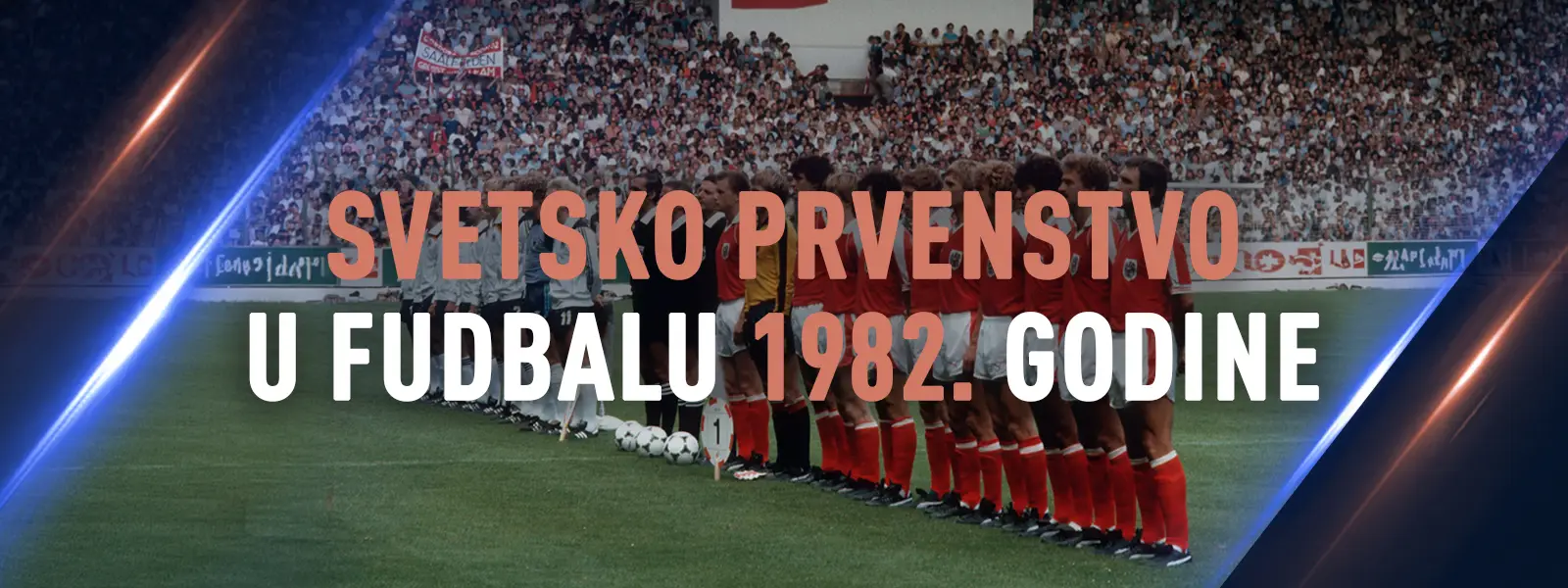
FIFA World Cup 1982
The 1982 FIFA World Cup was held in Spain from June 13 to July 11 and was the 12th edition of the tournament. It was a landmark edition, as the World Cup was expanded for the first time from 16 to 24 teams, opening the competition to a broader range of nations and giving the tournament a more global character.
The tournament in Spain is remembered for its high technical quality, dramatic results and several of the most memorable matches in World Cup history. At the same time, the expanded format introduced a new competition structure and produced a tournament full of surprises, while also raising questions about how the World Cup should balance growth with competitive quality.
Historical and Football Context
The early 1980s were a period of political and economic change across Europe. Spain was undergoing a process of democratic consolidation following decades of dictatorship, and hosting the World Cup gave the country an opportunity to present itself as a stable and modern European nation.
On the footballing front, the game was becoming increasingly physical while also placing greater emphasis on technical quality and creativity. National teams from South America and Europe brought contrasting styles to the tournament, while teams from other continents began to close the competitive gap and make their mark on the international stage.
The 1982 World Cup therefore brought different football philosophies together within an expanded tournament format, creating a competition that reflected the changing nature of the game.
Qualifying and Participating Teams
A record number of national teams entered the qualifying process for the 1982 World Cup, reflecting the tournament’s growing global appeal. The expansion to 24 teams allowed for greater representation from Africa, Asia and North America.
The final tournament featured teams from all inhabited continents, with hosts Spain and reigning world champions Argentina receiving automatic qualification. This diverse line-up added to the variety of playing styles and made the tournament’s competitive landscape more unpredictable.
Host Country and Tournament Organization
Matches at the 1982 World Cup were played in 14 cities across Spain, including Madrid, Barcelona, Seville, Valencia, Bilbao, Zaragoza and Málaga. The final was played at the Santiago Bernabéu Stadium in Madrid.
Organizing the tournament was a major undertaking due to the increased number of teams and matches. Infrastructure was upgraded to accommodate the expanded competition, while spectator interest remained high throughout the tournament. By hosting the World Cup, Spain also sought to strengthen its position on the European and global sporting stage.
The Course of the 1982 World Cup
Tournament Format
The tournament featured a unique format. In the first round, the 24 teams were divided into six groups of four. The six group winners and the six best runners-up advanced to the second round.
The second round consisted of four groups of three teams, with the winners of each group advancing to the semi-finals. The tournament then continued with the third-place play-off and the fina. One notable feature of the format was that the final matches in the second-round groups were not played simultaneously, which in some cases allowed for tactical calculations based on earlier results.
Group Stages
The first round produced several surprises and dramatic results. The expanded format brought a greater variety of playing styles to the tournament and made the outcome less predictable from the early stages of the competition.
The second round produced one of the most memorable matches in World Cup history — Italy’s 3–2 victory over Brazil. The match is often remembered as a striking example of the contrast between Brazil’s attacking flair and Italy’s tactical discipline, and it proved to be a pivotal moment in Italy’s journey towards the title.
The Final Stages
The semi-finals brought even more tension and confirmed the quality of the teams that remained in contention. Italy defeated Poland to book their place in the final, while West Germany reached the final after a dramatic encounter with France.
The West Germany–France clash went down in history as the first World Cup semi-final to be decided by a penalty shootout. The match further cemented the tournament’s reputation as one of the most dramatic in World Cup history.
The Final and the Fight for the Title
The 1982 World Cup final was played on July 11 in Madrid, with Italy facing West Germany.
Italy won 3–1 to claim their third World Cup title. The victory marked Italy’s return to the top of world football, 44 years after their previous triumph in 1938.
The final is remembered for Italy’s tactical discipline and clinical finishing, as well as the memorable scenes of celebration that followed the final whistle.
The Tournament’s Standout Players
The 1982 World Cup was defined by several outstanding individual performances. Paolo Rossi was one of Italy’s key players, scoring six goals throughout the tournament, including crucial goals in the latter stages.
His performances were instrumental in Italy’s run to the title, and he became one of the defining figures of the team’s success. Other standout players included Zbigniew Boniek, Karl-Heinz Rummenigge and Michel Platini, all of whom made a strong impression during the tournament.
Statistics and Interesting Facts
A total of 52 matches were played at the 1982 World Cup, with 146 goals scored. The average number of goals per match remained relatively high despite the increased number of participating teams.
The tournament is also remembered for one of the most controversial matches in World Cup history, known as the “Disgrace of Gijón”. West Germany’s 1–0 victory over Austria allowed both teams to advance to the next round after the teams knew which result would suit them. The incident eventually led to matches in the final round of the group stage being played simultaneously at subsequent World Cups.
The Place of the 1982 World Cup in Football History
The 1982 World Cup holds a special place in football history as the tournament that marked the beginning of a new era with an expanded field of participants. It showed that a larger number of teams could bring greater variety and unpredictability, while also raising questions about the structure and sporting integrity of the competition.
From a sporting perspective, the tournament in Spain confirmed that tactical discipline and efficiency in key moments remain crucial to winning the title. For that reason, the 1982 World Cup remains one of the most dynamic and widely analyzed tournaments in football history. The footballing story continued four years later at the 1986 FIFA World Cup, which delivered new iconic moments and one of the most famous individual performances in World Cup history.