
Boxing Day: The Day When Football Comes First
At a time when almost every major European league is on a winter break and players and families across the continent are spending Christmas in the comfort of their homes, the busiest part of the football calendar is just getting underway in England. During the festive period, English clubs play three rounds of matches in just eight days! Yet one of those days stands out above all the rest. Festive atmosphere, packed stadiums, top-class football – this is Boxing Day.
The day after Christmas, December 26, football clubs across England take to the pitch, while fans use their time off over the festive period to head to the stadium and watch the game. It is a day when football is played simply “for the love of the game”, when supporters arrive in family groups, and when the phrase “the most important of the world’s least important things” loses the word “least”.
How Did It All Begin?
The tradition of playing football matches on December 26 dates back to the 19th century.
On that very day in 1860, Sheffield F.C. and Hallam F.C., the two oldest football clubs in the world, played a match that would go down in history as one of the earliest landmark fixtures in organised football.
Later, during the inaugural season of the Football League, Preston played Derby and won 5–0, further cementing December 26 as an important date in football history and helping establish Boxing Day as a fixture in the English football calendar.
Why Is It Called Boxing Day?
It has nothing to do with boxing!
Although the name might suggest otherwise, Boxing Day has nothing to do with the sport or the boxing ring.
The name dates back to a time when wealthy British households employed numerous servants, who worked throughout Christmas Day. The following day, they were given a day off and a “Christmas box” – a box filled with food and gifts to take home to their families.
There are several other theories behind the name “Boxing Day”. One points to church collection boxes that were traditionally opened on December 26, while another refers to sailors’ boxes, which were used to collect money for the poor when ships returned from their voyages.
All these theories point to the same idea – giving and togetherness – and football has turned that symbolism into a celebration that has lasted for more than a century. Today, English fans receive a gift of their own from their clubs after Christmas, as teams keep playing at full speed while almost everyone else is taking a break, entertaining their supporters in the process.
Boxing Day as a Phenomenon: Outings, Spectacle and New Traditions
By the middle of the 19th century, Boxing Day had become a day for gatherings, outings and large crowds visiting museums, exhibitions and scientific displays across Britain. In 1849, “Bell’s Life” reported that almost 20,000 people had visited the British Museum alone that day – an extraordinary number for the time.
As sport, and football in particular, began to grow, it was hardly surprising that the public wanted to spend the holiday watching matches from the stands. In football’s early years, Boxing Day matches were particularly popular among the working class, who often wanted to make the most of their time off during the festive period and enjoy a bit of entertainment. It was within these communities, and driven by this very need, that many of England’s football clubs were born, eventually helping the game spread around the world. As crowds began to fill the stands, clubs realised that December 26 was an ideal opportunity not only to popularise the sport but also to boost their revenues. What began as a practical custom gradually became a routine – and eventually, a tradition.
Football on Christmas Day?
For decades, matches were played both on Christmas Day and Boxing Day.
In cities with two clubs, supporters would watch one team on December 25 and the other on December 26. Where a city had only one club, at least one festive fixture was guaranteed.
Although the fans enjoyed it, the schedule was exhausting for the players. It was not until the 1957/58 season that Christmas Day football came to an end, marking one of the first steps towards a less demanding fixture schedule for players. Boxing Day, however, remained.
The Most Prolific Boxing Day in History: 1963

Football fans in England often say that Boxing Day brings a different kind of football – more open, more carefree and simply more enjoyable to watch. It is a day when teams seem to defend less, attack more and play with a freedom that brings the game closer to the supporters. Many players say that this is when you play with your heart, as if everyone is trying to return to the roots of the game, when football was played simply for the joy of it.
If there is one day that stands out above all others, it is Boxing Day 1963.
Across ten First Division matches, 66 goals were scored – a record that is still remembered as a symbol of open, free-flowing football.
It was a day when defences seemed to have stayed at home, while the attackers appeared determined to give the fans an unforgettable Christmas present.
Here are the results:
- Fulham 10–1 Ipswich Town *(Fulham’s record victory and Ipswich’s heaviest defeat in history)
- Leicester City 2–0 Everton
- Liverpool 6–1 Stoke City
- Nottingham Forest 3–3 Sheffield United
- Sheffield Wednesday 3–0 Bolton Wanderers
- West Bromwich Albion 4–4 Tottenham Hotspur
- West Ham United 2–8 Blackburn Rovers
- Wolverhampton Wanderers 3–3 Aston Villa
The modern Premier League era has also produced some memorable Boxing Days:
- 1999/2000 season – 35 goals. The highest-scoring Boxing Day in the Premier League era. The day featured some surprising results, including Arsenal’s 3–2 defeat to Coventry and Everton’s emphatic 5–0 victory over Sunderland.
- 2002/03 and 2003/04 seasons – 31 goals. Two consecutive seasons produced more than 30 goals, proving once again that Boxing Day rarely disappoints.
- 2005/06 and 2021/22 – 28 goals each. Slightly less prolific, perhaps, but still high-scoring rounds that kept the tradition of festive goals alive.
No One Does It Like the English
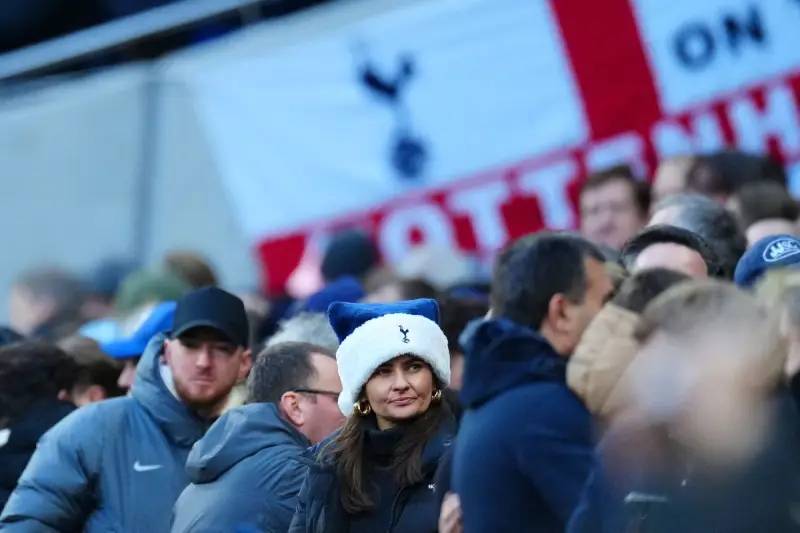
Unlike Germany, France, Italy and Spain, where football takes a winter break and the game falls silent for a while, football in England never stops.
Interestingly, Italy tried introducing a Boxing Day round in 2018. The fans loved it, but the players did not, and the experiment was never repeated.
In England, however, things are different. Boxing Day is part of the country’s identity, culture and tradition. Sold-out stadiums, short journeys and an atmosphere that brings together the family spirit of Christmas and the excitement of sport – all in a single day.
Boxing Day lives on. Because it is about more than football. It is a tradition more than 150 years old. Football in England has always been part of everyday life and, from the very beginning, has belonged to the people – a sport for everyone.
TV Rights Are Breaking with Tradition
This year, however, brings a break from tradition. Only one match will be played on Boxing Day, with the Premier League having to schedule most of the fixtures for December 27, when the weekend begins. Under their current contracts, broadcasters have 33 weekends each season during which they can show live matches. With Boxing Day falling on a Friday this year, most fixtures will instead be played in the usual Saturday time slot. The Football Association also has an agreement with the Premier League requiring matches to be played at weekends, largely because of the increasingly congested fixture calendar created by clubs’ commitments in European competitions.