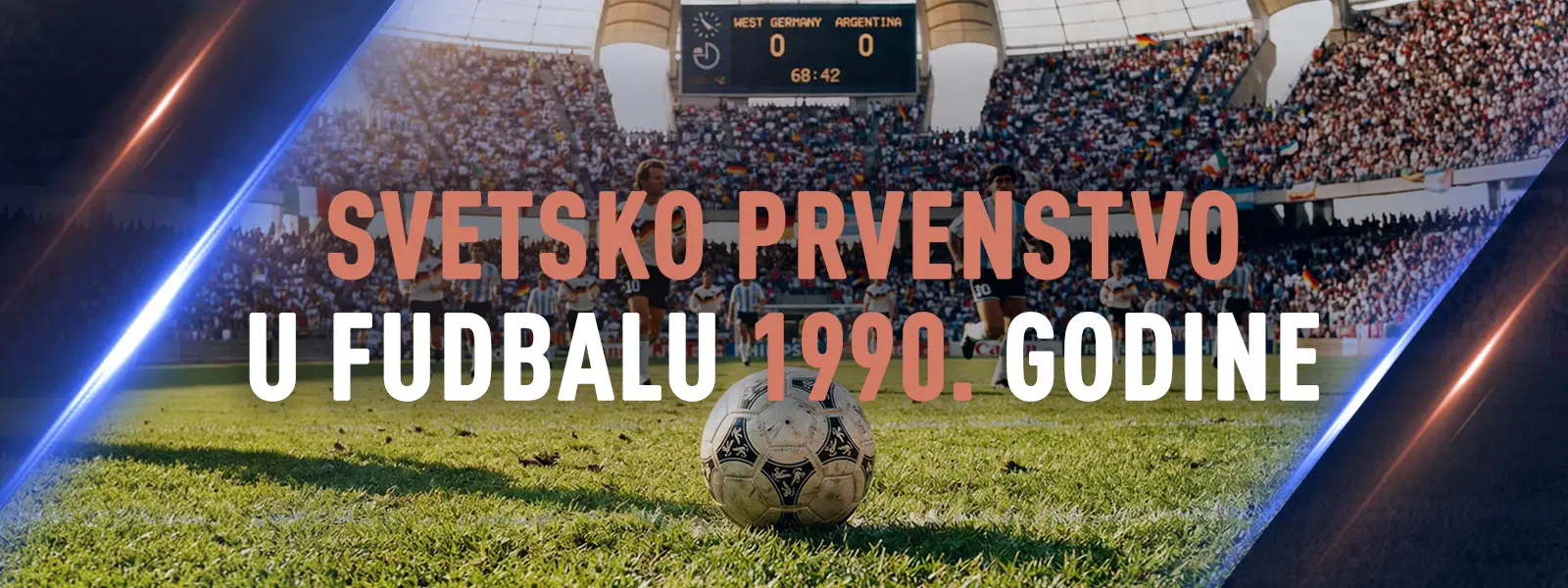
FIFA World Cup 1990
The 1990 FIFA World Cup was held in Italy from June 8 to July 8 and was the fourteenth edition of the tournament. The competition is remembered for its tightly contested matches, low-scoring games and the strong defensive organisation displayed by many national teams.
The World Cup in Italy is often described as a contrast to the 1986 tournament. While Mexico 1986 was a symbol of individual creativity and attacking football, Italy 1990 placed greater emphasis on discipline, caution and tactical control.
Historical and Social Context
The beginning of the 1990s was a period of profound political change in Europe. The fall of the Berlin Wall in 1989 marked the beginning of a new era, while the 1990 World Cup was the last in which West Germany competed as a separate national team before German reunification later that year.
The tournament was held in a country with a strong footballing tradition, and Italy sought to reaffirm its status as one of Europe’s leading footballing nations by hosting the event.
Qualifiers and Participating Teams
The tournament format remained unchanged from 1986, with 24 national teams qualifying for the finals. The qualifying process involved more than 110 national teams from all confederations, reflecting the continued global interest in the World Cup.
The final tournament featured national teams from every inhabited continent, with hosts Italy and the reigning world champions Argentina receiving automatic qualification.
Host Country and Tournament Organisation
Matches were played in 12 Italian cities, including Rome, Milan, Naples, Turin, Florence, Bologna, Bari, Genoa, Verona, Cagliari, Udine and Palermo. The final was played at the Stadio Olimpico in Rome.
The tournament included major infrastructure improvements and the construction of new stadiums, most notably the Stadio San Nicola in Bari. The tournament attracted large crowds, while the atmosphere in the stadiums was intense and emotionally charged.
The Course of the World Cup
Tournament Format
As in 1986, the 24 national teams were divided into six groups of four. The top two teams from each group, along with the four best third-placed teams, advanced to the Round of 16.
This system also allowed teams adopting a more cautious approach to progress to the knockout stage, further reinforcing the tournament’s defensive character.
Group Stage
The group stage was characterised by low-scoring matches and a large number of draws. Many national teams adopted a tactical approach centred on organised defending.
Defending champions Argentina began the tournament with a shock defeat to Cameroon, who secured a 1–0 victory in the opening match. The result was an early indication that the tournament would also produce its share of surprises.
The Knockout Stage and Key Moments
The knockout stage featured a series of dramatic encounters decided by narrow margins or penalty shootouts. Argentina advanced from both the quarter-final against Yugoslavia and the semi-final against Italy following penalty shootouts, demonstrating remarkable competitive resilience.
The semi-final between Italy and Argentina, played in Naples, was particularly memorable. The match remained level after extra time, with Argentina eventually prevailing in the penalty shootout.
In the other semi-final, West Germany defeated England in a penalty shootout, in another match that highlighted the tactical and psychological demands of the tournament.
The Final and the Battle for the Title
The 1990 FIFA World Cup final was played on July 8 at the Stadio Olimpico in Rome. West Germany faced Argentina in a repeat of the 1986 World Cup final.
West Germany won 1–0, with Andreas Brehme scoring the only goal from the penalty spot late in the match. The victory secured West Germany’s third World Cup title.
The final was remembered for its physical intensity, tactical discipline and the limited number of clear-cut chances, which came to symbolise the character of the tournament as a whole.
The Tournament’s Standout Players
The 1990 World Cup was defined by players who provided stability and tactical leadership for their teams. Lothar Matthäus was one of West Germany’s key players throughout the tournament, while Diego Armando Maradona once again played a key role in Argentina’s run to the final.
The tournament’s top scorer was Salvatore Schillaci, who scored six goals and emerged as one of the competition’s biggest surprises.
Statistics and Interesting Facts
A total of 52 matches were played, with 115 goals scored, giving the tournament the lowest goals-per-game average in World Cup history at the time.
The 1990 World Cup is remembered as a tournament that highlighted the importance of tactical organisation and prompted discussions about changes to the Laws of the Game. Among the changes introduced in the early 1990s was the restriction preventing goalkeepers from handling deliberate kicks from teammates, along with other measures aimed at encouraging more attacking play.
The Place of the 1990 World Cup in Football History
The 1990 World Cup marked a transition between two eras of football. It brought one era to a close and foreshadowed the changes that would follow in the early 1990s, including the reunification of Germany.
Although often criticised for its defensive character, the tournament in Italy remains significant as an important historical and competitive milestone that helped shape the future of world football. Four years later, the 1994 FIFA World Cup brought a different footballing landscape, with a new generation of players and changes that continued to shape the game.