FIFA World Cup 1954
The 1954 FIFA World Cup was held in Switzerland from June 16 to July 4 and was the fifth edition of the tournament. The competition took place at a time when Europe, almost a decade after the end of the Second World War, was entering a period of stabilization and recovery. The tournament reflected the continent’s return to major international sporting events while also marking a new chapter in the development of football.
The 1954 World Cup is remembered for its exceptionally high number of goals, its attacking style of play, and one of the biggest upsets in the history of the sport. Despite clear favorites and widespread expectations, the tournament ultimately demonstrated just how unpredictable football can be and how quickly the course of a championship can change in a single match.
Historical and Footballing Context
The mid-1950s were a period of relative stability in Western Europe, while the divisions of the Cold War were becoming increasingly pronounced. Switzerland, as a neutral country, was a suitable host for a major international tournament. Its political neutrality and well-developed infrastructure provided the conditions for the competition to be staged in a peaceful and well-organized environment.
In football, the sport was entering a period of rapid development. Tactics were becoming more sophisticated, physical preparation was gaining importance, and the differences between European and South American styles of play were becoming less pronounced. National teams were also playing international matches more frequently, encouraging an exchange of ideas and helping to bring different approaches to the game closer togethe.
Against this backdrop, the 1954 World Cup offered an early indication of how the balance of power in international football was beginning to change.
Qualifying and Tournament Participants
A record 38 national teams entered the qualifying competition for the 1954 World Cup. Three withdrew before the qualifying matches began, leaving 35 teams competing for a place in the final tournament. The qualification process ultimately determined the 16 teams that would take part in the finals in Switzerland, including the hosts, who qualified automatically.
The field also included several teams making their World Cup debut, further broadening the tournament’s geographical and footballing diversity. At the same time, a number of established national teams arrived in Switzerland with high expectations and ambitions of their own, setting the stage for a highly competitive tournament.
Alongside hosts Switzerland, reigning world champions Uruguay also qualified automatically, while the remaining places were decided through the qualifying competition.
Host Country and Tournament Organization
The 1954 World Cup matches were played in six Swiss cities: Bern, Zurich, Basel, Lausanne, Geneva, and Lugano. The tournament’s centerpiece was the final in Bern, played at Wankdorf Stadium, which would later become one of the defining symbols of the championship.
The tournament was organized efficiently and effectively, in keeping with Switzerland’s reputation for precision and stability. Although the stadiums were smaller than those used at some earlier and later World Cups, the atmosphere at the matches was intense, and public interest was high.
The tournament was held without major organizational problems, further strengthening the reputation of the World Cup as an established and prestigious international sporting event.
The Course of the World Cup
Tournament Format
The 1954 World Cup was played under a unique group-stage format. The 16 teams were divided into four groups of four, but teams did not play against every other team in their group. Each national team played two group matches against predetermined opponents, a system designed to reduce the number of games and ease the demands of the tournament schedule.
If a group-stage match ended level after 90 minutes, extra time was played. If there was still no winner after extra time, the match ended in a draw. This format placed additional physical demands on the players and made the matches particularly demanding. It was unique in World Cup history and was never used again.
Group Stage and Surprises
The tournament produced a remarkable number of goals from the outset, along with several results that suggested the competition would be unusually high-scoring. Some national teams recorded emphatic victories, while others displayed unexpected weaknesses that had not been apparent before the tournament.
Several teams attracted particular attention for their highly effective attacking play, contributing to an unusually high number of goals per match and creating the impression that football was entering a new era of attacking play.
The Knockout Stages
As the tournament progressed into the knockout stages, the competition became even more intense. Matches became more physical and closely contested, but the attacking character of the tournament remained intact. Most of the favorites managed to live up to expectations and advance to the latter stages of the competition.
One of the standout teams of the tournament was Hungary, which played an exceptionally dominant and free-scoring style of football. Their performances in the early stages left a lasting impression and reinforced their status as one of the leading teams of the era.
On the other hand, some national teams reached the knockout stages with relatively little attention and low expectations, only to demonstrate an ability to adapt to their opponents and the circumstances of each match.
The Final and the Fight for the Title
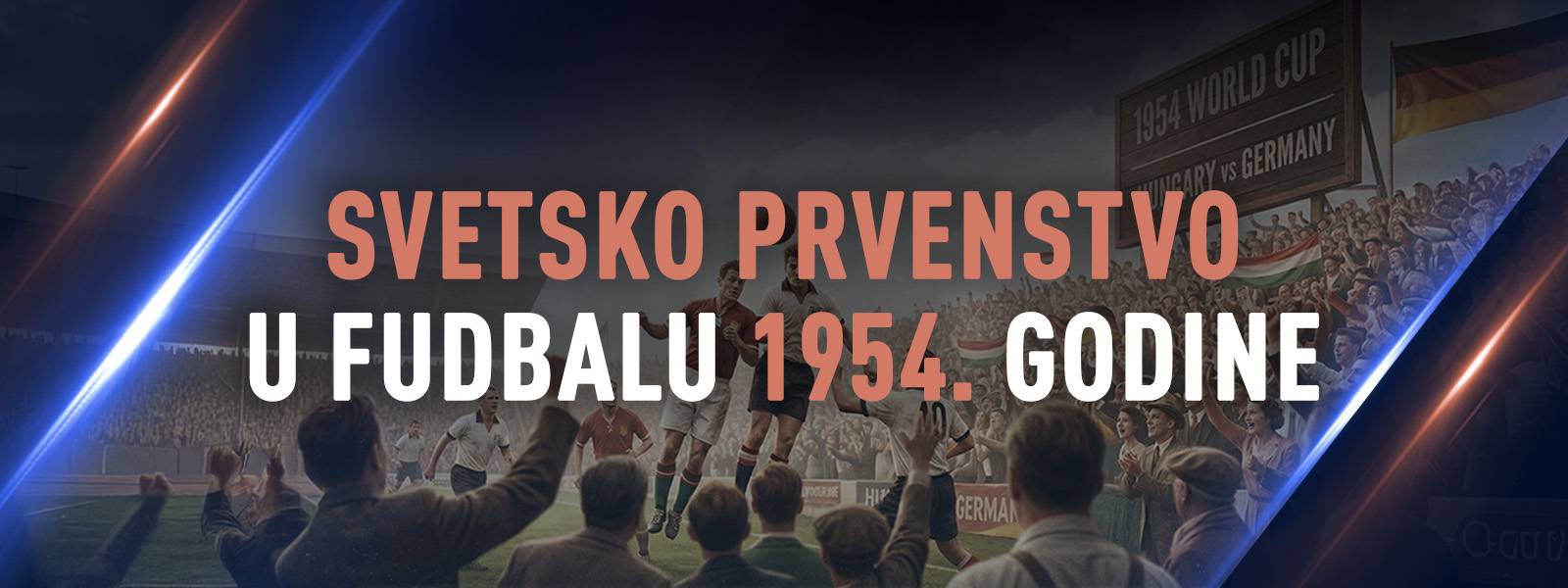
The 1954 FIFA World Cup final was played on July 4 in Bern, with Hungary facing West Germany. Based on the teams’ previous results and their perceived strength, Hungary entered the match as the clear favorite.
Hungary entered the final as overwhelming favorites, having gone unbeaten for a long run of matches and already defeated the same opponent convincingly in the group stage. However, the final produced a completely different outcome. West Germany came from behind to win 3–2, securing their first World Cup title.
The result went down as one of the biggest upsets in World Cup history and is often cited as a classic example of the unpredictability of football at the highest level.
Key Figures of the Tournament
The 1954 World Cup featured several outstanding individual performers, although the tournament is remembered more for the strength of the teams than for the dominance of any single player.
The tournament’s top scorer was Hungary’s Sándor Kocsis, who scored 11 goals. His remarkable scoring record ranks among the most impressive individual achievements in World Cup history and underlined the attacking strength of the Hungarian national team.
Several West German players also played crucial roles during the latter stages of the tournament, particularly in the final, earning a lasting place in German football history. A few years later, the football world turned its attention to a new generation of players, led by Brazil at the 1958 World Cup, a tournament remembered for the emergence of a young Pelé and Brazil’s first world title.
Statistics and Interesting Facts
A total of 26 matches were played at the 1954 World Cup, producing 140 goals. The tournament recorded the highest average number of goals per match in World Cup history, a record that still stands today.
The tournament is also remembered for showing how tactical discipline and mental resilience can prove decisive in key matches, regardless of previous results or current form.
The Place of the 1954 World Cup in Football History
The 1954 World Cup holds a special place in football history as a tournament that clearly demonstrated the limits of predictions and expectations. It showed that no national team, regardless of how dominant it may appear, is immune to an upset when it matters most.
At the same time, the World Cup in Switzerland left a lasting mark on the development of football, both through its tactical lessons and through its broader significance for the countries that took part. For these reasons, the 1954 World Cup is still regarded as one of the pivotal moments in the history of the sport.