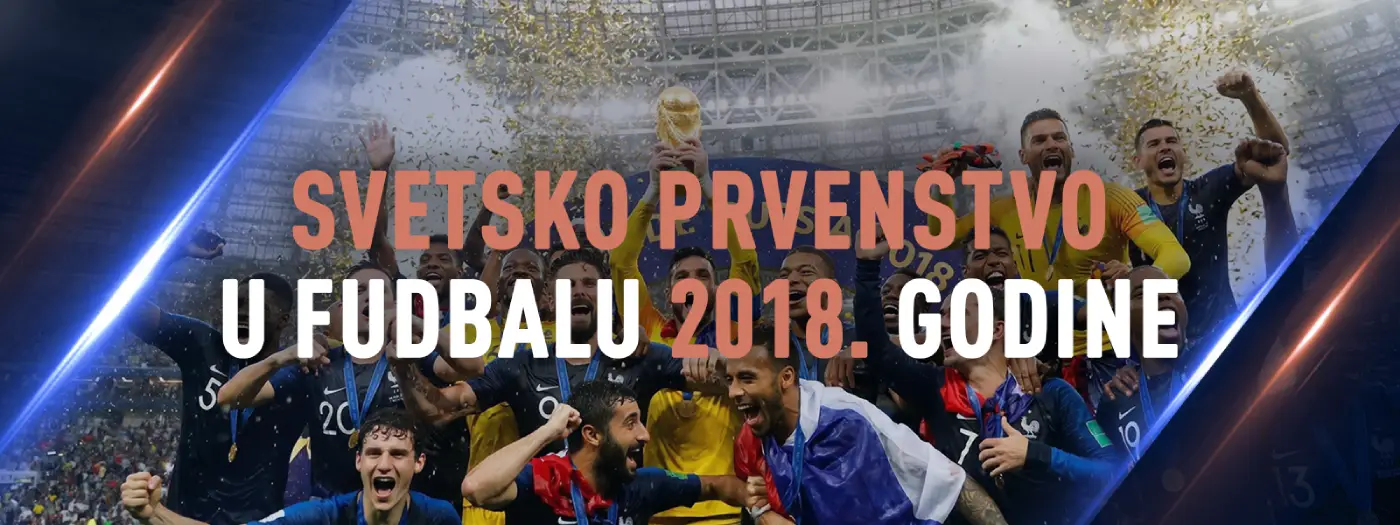
FIFA World Cup 2018
The 2018 FIFA World Cup was held in Russia from June 14 to July 15 and was the 21st edition of the tournament. It will be remembered for a host of dramatic matches, spectacular comebacks and a changing of the guard that marked the end of one era and the beginning of another in world football.
Russia hosted the FIFA World Cup for the first time, bringing together traditional footballing powers and a new generation of leaders on the world stage. The tournament demonstrated just how tactically disciplined modern football had become, while also showing that individual brilliance can still decide the biggest matches.
Historical and Organisational Context
Russia was awarded hosting rights in 2010, and staging the World Cup represented a major infrastructure and logistical undertaking. Matches were played across 11 host cities: Moscow, with two stadiums – Luzhniki Stadium and Otkritie Arena – as well as Saint Petersburg, Sochi, Kazan, Nizhny Novgorod, Samara, Rostov-on-Don, Volgograd, Saransk, Yekaterinburg and Kaliningrad.
The final was played at Luzhniki Stadium in Moscow in front of more than 78,000 spectators.
The tournament attracted significant international attention due to the political circumstances surrounding the host country, but it passed without any major security incidents. The tournament was widely regarded as a success, with high attendance and efficient logistics.
The 2018 World Cup was also the first edition to use the VAR (Video Assistant Referee) system, ushering in a new technological era in the history of the competition. VAR had a significant impact on decision-making, particularly in penalty incidents.
Qualifying and Teams
A total of 210 national teams took part in the qualifying process, a record at the time. The final tournament retained the 32-team format, with the teams divided into eight groups of four.
Russia qualified automatically as the host nation, while Germany entered the tournament as the defending champions from 2014.
The tournament featured players already performing at the highest level for their European clubs, including Kylian Mbappé, Antoine Griezmann, Luka Modrić, Eden Hazard, Kevin De Bruyne, Harry Kane, Neymar and many others. The 2018 World Cup marked a shift from the Messi and Ronaldo generation towards a younger group of leaders in European football, a transition that continued at the next edition, the 2022 FIFA World Cup.
Host Country and Tournament Atmosphere
Russia welcomed the World Cup with renovated infrastructure and modern stadiums. The tournament’s vast geographical spread, stretching from Kaliningrad in the west to Yekaterinburg in the east, gave the tournament a unique character.
The atmosphere inside the stadiums was exceptional, with large numbers of fans from Latin America and Western Europe creating a vibrant atmosphere. The host nation itself was one of the tournament’s most pleasant surprises, further boosting interest among local fans.
The World Cup Campaign
Tournament Format
The tournament retained the standard format of eight groups followed by a knockout stage beginning with the Round of 16. Extra time was played in knockout matches, followed by penalties if the score remained level.
One notable feature was that three of the quarter-finalists reached the last eight by winning penalty shootouts, highlighting just how closely contested the tournament was.
Group Stage
The group stage produced several major surprises. Defending champions Germany were eliminated at the group stage, finishing behind Sweden and Mexico after losing 2–0 to South Korea in their final match. This continued a trend from previous tournaments in which reigning champions struggled to defend their title.
Argentina only secured their place in the knockout stage on the final matchday, while Spain underwent a major change just before the tournament when Julen Lopetegui was replaced as head coach.
Belgium and Croatia both made strong impressions in the group stage, combining attacking efficiency with tactical discipline.
The Knockout Stage and Key Moments
The Round of 16 produced one of the tournament’s most thrilling matches, with France defeating Argentina 4–3, including two goals from Mbappé and a spectacular strike from Benjamin Pavard.
Croatia demonstrated remarkable mental resilience by winning two consecutive penalty shootouts, against Denmark and Russia. Goalkeeper Danijel Subašić was a key figure in both matches.
Belgium defeated Brazil 2–1 in the quarter-finals, ending South America’s hopes of winning the tournament.
England reached the semi-finals for the first time since 1990, but Croatia ended their run after extra time.
The semi-final between France and Belgium ended in a narrow 1–0 victory for France, with Samuel Umtiti scoring the decisive goal.
The Final and the Battle for the Title
The final was played on July 15, 2018, between France and Croatia.
France won 4–2 to claim their second World Cup title, following their first triumph in 1998. Griezmann scored from the penalty spot, while Pogba and Mbappé also found the net. Croatia’s goals came from Ivan Perišić and Mario Mandžukić, with Mandžukić also scoring an own goal for France.
The final was open and attacking, with six goals making it one of the highest-scoring finals in modern World Cup history.
Standout Players of the Tournament
Harry Kane finished as the tournament’s top scorer with six goals.
Luka Modrić won the Golden Ball as the tournament’s best player, becoming the first player since 2007 to win the Ballon d’Or and be named the World Cup’s best player in the same year.
Kylian Mbappé became only the second teenager in history to score in a World Cup final, after Pelé in 1958.
The Hazard–De Bruyne duo made a strong impression for Belgium, while France’s defence, led by Raphaël Varane, was crucial to the champions’ stability.
Statistics and Facts
A total of 64 matches were played at the tournament, with 169 goals scored.
The 2018 World Cup was the first World Cup to feature the VAR system, while a record 29 penalties were awarded during the competition.
The World Cup also marked a changing of the guard: for the first time since 2006, neither Lionel Messi nor Cristiano Ronaldo reached the quarter-finals.
The 2018 World Cup’s Place in Football History
The 2018 World Cup will be remembered as a tournament defined by tactical discipline and youth. France demonstrated the strength of a well-organised system and squad depth, while Croatia achieved the greatest result in their history by reaching the final.
The World Cup in Russia showed how modern technology, physical preparation and tactical flexibility have become an integral part of the modern game, marking the beginning of a new phase in the development of football.